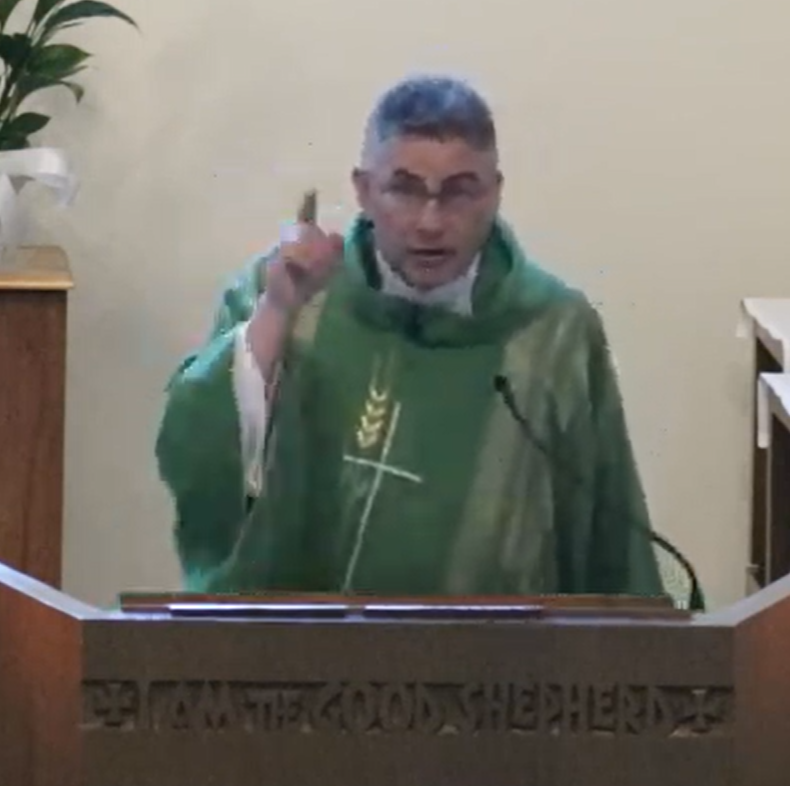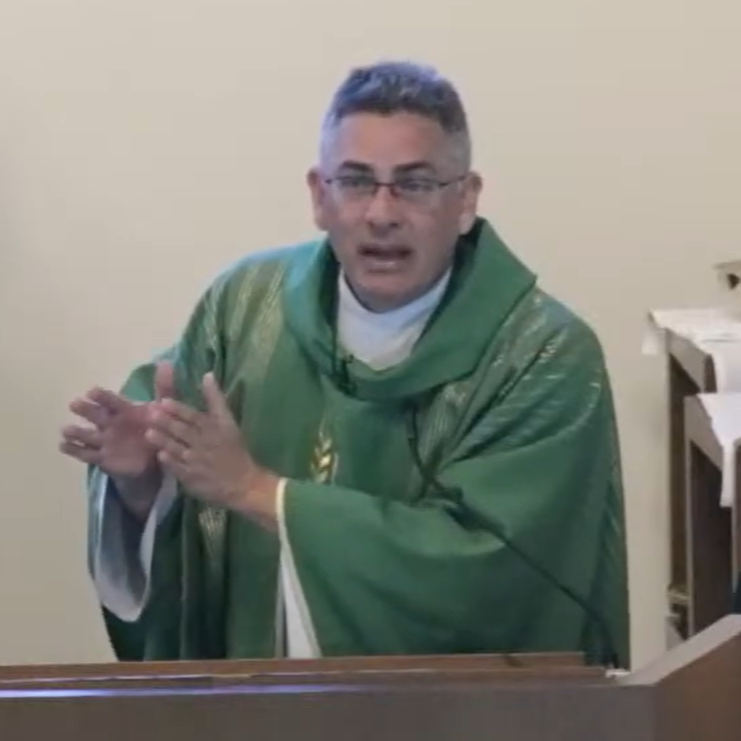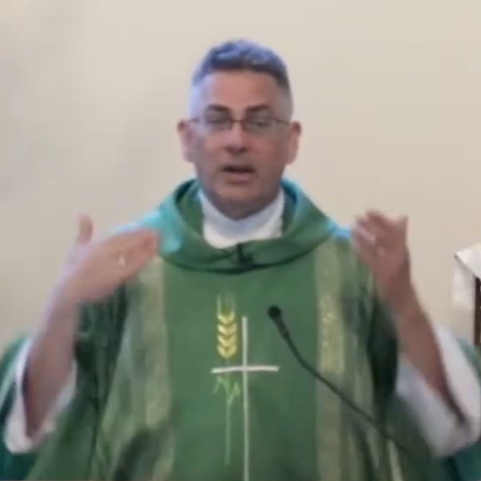

Good Shepherd Sermons & Blogs
When we make winning our ultimate goal, we cause others to lose.
2026-42
sermon preached at Church of the Good Shepherd, Federal Way, WA
www.goodshepherdfw.org
by the Rev. Josh Hosler, Rector
The Eighth Sunday after Pentecost (Proper 11A-tr 2), July 19, 2026
Wisdom of Solomon 12:13, 16-19; Psalm 86:11-17; Romans 8:12-25; Matthew 13:24-30,36-43
Have you ever felt like you just can’t win? Like no matter what successes you achieve, at some point it all falls apart?
You’re in good company. See, it’s not just you. It’s the entire human race.
The biggest argument I hear against the reality of God is that if God were both good and powerful, God would just take all the pain and confusion away. Also, God would show up and say hi so that we couldn’t doubt God’s reality.
Well, we Christians believe that God did indeed show up and say hi! But as for taking all the pain and confusion away … we don’t have an easy answer to that problem. What we do have today are three different readings that advise us on how to handle it.
The Book of the Wisdom of Solomon is found in the Apocrypha—that section of the Bible that Roman Catholics have but Protestants don’t. The book was not written by Solomon; it was composed nearly 1000 years after him and was heavily influenced by Plato. In fact, it was a current “bestseller” at the time of Jesus.
According to the Book of Wisdom, God’s ways don’t need to be questioned, because God is benevolent by nature. The author advises us that to be in right relationship with God, we must be kind to one another, as God is kind to us. Only the evil have anything to fear from God, and they have ample opportunity in life to shape up. This sounds uncannily like a preview of Jesus’ teachings! It doesn’t solve the problem of suffering, of course, but it does give us a core ethical standard.
In his letters to the early churches, Paul deals extensively with the reality of suffering, because he has dedicated himself to spreading the Good News of the risen Christ no matter what suffering he may have to endure. One reason people take comfort in Paul’s words is that he also suffered a lot.
For Paul, suffering is an inevitable part of God’s program of salvation for all. Many have taken comfort in today’s words from Paul: “I consider that the sufferings of this present time are not worth comparing with the glory about to be revealed to us.” In Paul’s opinion, the decades following Christ’s Resurrection were an especially evil time, with demonic forces scrambling to regroup after their cosmic defeat and influence humans for the worse.
Much of modern-day American Christianity projects Paul’s first-century perspective onto the 20th and 21st centuries, assuming like he did that the world is about to end. Well, Paul was wrong about that, so who’s to say we’re not also wrong? Anyway, if the world were about to end, would we feel much need to protect what’s in it—like the poor and the suffering, let alone all the creatures of the world and the environment they live in?
Those with this theology who are especially fearful—and usually less knowledgeable about the story of Jesus than other Christians—pursue power and influence in the world. They say they do it in the same of Christ, but their tactics are the exact opposite of how Jesus actually lived. Driven by fear, racism, and worship of military power, they are known as Christian nationalists, and in this present time, they are wielding the greatest influence they’ve ever achieved.
To be clear, this isn’t a partisan political divide, but a moral divide. Most Americans in both major parties, at least those who are paying attention at all, are horrified at what America has become over the past ten years. It’s so easy to become discouraged. Like American Christians have done for decades, we may be tempted to take Paul’s first-century theology and yank it into the 21st. It feels like we just can’t win, and if that’s the case, then maybe, just maybe, Jesus is about to return and end the world.
I want to caution strongly against this assumption. For one thing, it adopts entire layers of theology without ever examining them to see if they are sound. Second, it’s unproductive: it gives us no helpful advice on how to live our lives in this present time. And this is why I think the most helpful words of all today come from Jesus himself, in his parable of the wheat and the weeds.
In Matthew’s gospel, Jesus refers not to “the kingdom of God,” but “the kingdom of heaven.” He lays out parable after parable to describe it. And the first thing we need to understand—I find I can never say this too often—is that “heaven” in this context is about the present world, not merely the afterlife. “Heaven” refers to the field of God’s influence and power in creation. An eternal afterlife with God is an assumed extension of this, but it’s not where Jesus typically put his energy.
Today’s parable makes this abundantly clear. The problem of the weeds growing alongside the wheat will be addressed at “the end of the age,” whatever you take that to mean. For now, though, Jesus gives straightforward instructions: Don’t pull the weeds! Impatience with the weeds leads to all our worst behaviors.
Dare I give a few examples? If you see illegal immigration as a weed, your frustration and impatience will cause you to go into the field to pull up plants by the roots, throwing people into concentration camps with no regard for their individual situations. If you see communism as a weed (whether or not you apply that label accurately), again, you’ll just start yanking up plants by the roots, believing it will secure your power. But again, you’ll overstate your ability to tell the wheat from the weeds.
If you see Christian nationalism as a weed, then in some imagined future when you finally get some influence over it, you may want to stamp out the people who enforced it for so many years. You may want to go above and beyond merely prosecuting specific crimes and instead pass laws to ban the very ideas themselves.
But trying to ban ideas will always be like pulling weeds that are wrapped around tender new shoots of wheat. We thought we had banished fascist ideas after World War II. Privileged white folks like myself thought the Civil Rights Movement had helped us ban racist ideas (though people of color were never fooled!). We were wrong. We only made these ideas socially unacceptable until such time as the power dynamics shifted.
So back to my initial question: Have you ever felt as if you just can’t win? Like no matter what successes you achieve, at some point it all falls apart? Well, you know what? You’re absolutely right. You just can’t win. Not forever. Only in fleeting moments, none of which should deceive us into thinking we’ve got this life thing all figured out.
Jesus says as much in today’s parable. When you think you’re winning, you may well be hurting the precious crop that God has labored day and night to grow. But there are so many ways that we should know we can’t win. Let me just list a few:
- You’ll never do everything perfectly.
- You’ll never be able to help all those who need it.
- You’ll never get everyone to like you.
- You’ll never satisfy your deepest longings.
- You’ll never know enough.
- You’ll never keep everyone on the same page.
- You’ll never have all the experiences you want.
- You’ll never be able to protect everyone from harm.
- You’ll never achieve ultimate inner peace.
Please note that my “nevers” refer to this present time, this present life that God has given us. Because when we make winning our ultimate goal, we cause others to lose. And to God, that’s not an acceptable state of things. Not ultimately.
Paul writes that “the creation was subjected to futility.” God has given us a universe where it’s possible to wonder, “What’s the point of all this?” Books of the Bible like Ecclesiastes and Job wonder about this a lot. We spend all this energy on all our projects, and then we die. The poor suffer, and the wicked prosper, and then they all die just the same. So what’s the point? It’s no wonder that we finally arrived at the idea of an afterlife, because any other reality feels too unfair.
But what if God has subjected the creation to futility for a purpose? Paul suggests that the purpose of all this futility is to set us free! If we know that nothing we build is permanent, that no future we imagine is assured, we can be free of the desperate need to make it such. If we know that we’ll never be perfect, we can settle for doing good things in the moment we have. If we know we can’t solve the world’s problems, we can content ourselves with being kind to one another and looking for opportunities to solve smaller problems, within our limited sphere of influence.
Counterintuitively, this kind of surrender to futility can lead to happiness and hope. I’ve seen it myself time and again. When we quit trying to fix the world, we can fix something smaller for now. When we quit trying to make our lives mean something forever, we can make today’s choices mean something to somebody we love—or even to somebody we don’t love at all. To paraphrase a quote from one of the Star Wars movies, “We won’t win by fighting what we hate, but by saving what we love.”
“Hope that is seen is not hope,” Paul writes. “But if we hope for what we do not see, we wait for it with patience.” Well, I’m not sure the patience part is assured! Very often I wait for it with impatience. It doesn’t help anyone, but it’s how I feel. And then, when I get over myself, I can get back to being good to others. In its own small way, every opportunity to love, even in a present time that is groaning in labor pains, adds to my hope for a universal reality in which the struggle is over, and God gathers us all into eternal love.
So, congratulations: you just can’t win. Accept it! Maybe even love the futility of the notion that we can be God. We can’t. You and I are full of wheat and full of weeds. When we talk in the church about God’s judgment, we mean the separation of the weeds in us from the wheat in us, carefully, lovingly … and not yet! Amen.