
Good Shepherd Sermons & Blogs
Have you heard the good news?
2026-26
sermon preached at Church of the Good Shepherd, Federal Way, WA
www.goodshepherdfw.org
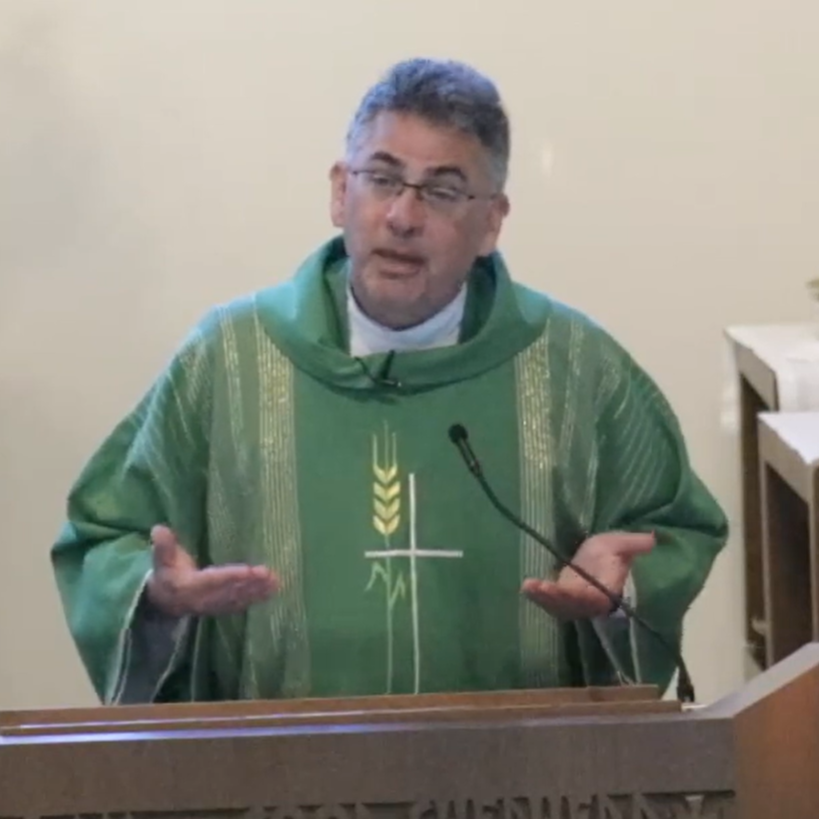
by the Rev. Josh Hosler, Rector
The Second Sunday of Easter, April 12, 2026
Acts 2:14a,22-32; Psalm 16; 1 Peter 1:3-9; John 20:19-31
Have you heard the good news? Our nation did NOT cause a nuclear holocaust last Tuesday!
Yeah, that was wrenchingly stressful and evil and totally unnecessary, and there are solutions to prevent that sort of nonsense from ever happening again, if only certain elected officials would get off their duffs, swallow hard, and do their jobs. But when we talk about “good news” in church, I don’t think that’s the sort of thing we mean. Let’s try something different.
Have you heard the good news? I was working on a really difficult algebra problem, and I was totally stumped for a while, but then I got my thinking straight, and you know what? You’re not going to believe this. X equals … seven point three!
A little underwhelming, isn’t it? It’s something I might be legitimately happy about for some reason, but if you wanted to catch that vibe from me, you’d have to indulge me as I explained to you slowly why this math problem was so important for me personally, and honestly, who cares? OK then, let’s try again.
Have you heard the good news? … Beethoven!
Hmmm, now we may be getting somewhere. And let’s say you’ve never heard Beethoven before. I could play for you the first movement of his Fifth Symphony, and you might say, “Oh yeah, I know this … dun-dun-dun-dunnnnn!” But you still might not see what the big deal was, so next I’d play the second movement of the Seventh Symphony, and you might go all quiet and say, “Oh, that’s so different from the other one, and it’s unbelievably beautiful.” And then I’d play you the first movement of the String Quartet in C-Sharp Minor, and you’d say, “This sounds so tragic it almost brings me to tears.” I would explain that Ludwig was pretty much deaf by that point but was still able to create like this, and then we’d sit together for a whole hour while I played you the great Ninth Symphony, and I’d explain that Beethoven never heard a single note of it, and after he conducted it at the premiere, someone had to tap him on the shoulder afterward to make him turn around to acknowledge the standing ovation. And by then your tears might be flowing as freely as Mary Magdalene’s were on Easter morning.
But all of that required some effort on your part. It wasn’t enough for me merely to tell you that the good news is Beethoven, and leave it at that. You might have gone and listened on your own and found your own way into this good news, but that would be a lot less meaningful than sharing it together.
The work of an apostle is to bring good news, yes, but it’s more than that. Apostles stick around to expound on that good news, and then to get off their own soap box and be with the hearers of the good news, and help them draw ever closer to it.
See, in this place, the good news we share is not of the “we’re not dead yet” variety. It’s not like X equals seven point three, either. It’s more like the good news of Beethoven—but even bigger. Much, much bigger.
And that’s why it usually takes longer to understand. It requires deep human interaction, and investment of time and energy, and honestly, a reorientation of our lives. It means that we, having not just heard but absorbed and begun to live this good news, start to act as apostles ourselves. So now we come to the Acts of the Apostles, a book in the Bible where we find many occasions of people bringing Good News to other people. Indulge me for a moment while I give some background on how we use this book in our worship.
On most Sundays, we read something from the Old Testament. The exception is the fifty days of Easter, when we replace the Old Testament reading with something specifically from the Acts of the Apostles. The first thing you need to know about Acts is that it is the sequel to the Gospel According to Luke. Clearly written by the same author, it’s the only book in the Bible that chronicles in narrative form the earliest days of the Church. Scholars love holding the Acts of the Apostles up against the letters of Paul and other letters in the New Testament to see what lines up and what doesn’t. And it turns out there’s plenty of both.
So the next thing to know about the Acts of the Apostles is that it was almost certainly written decades after the events it describes. Jesus was crucified around the year 30. We believe Luke’s gospel to have been written in the 80s, and Acts was written sometime shortly after that.
This means that the stories in the Acts of the Apostles come down to us through already established layers of tradition. They were oral tellings first, shared and propagated within worshiping communities of Christians in various places around the Mediterranean Sea. This also means that there are certain assumptions working in the background to affect the writer’s storytelling. For instance, the book was written after the year 70, which means that the Roman Empire had already destroyed the Jewish temple in Jerusalem.
Today’s passage comes from chapter 2—so, early in the book. The setting is Jerusalem, a mere ten days after the Risen Christ has ascended, leaving his apostles with instructions to wait for the coming of the Holy Spirit. What we find here is Peter expounding on passages from the Old Testament. In other words, he’s talking to his fellow Jews and using examples from the holy scriptures they all know backward and forward.
We also skipped some verses. In the part we skipped (but that we’ll come back to in a couple months when we celebrate the Day of Pentecost), Peter was addressing his fellow Jews who were locals: Judeans of Jerusalem. Now he’s addressing a broader group: Jews who have made pilgrimage to Jerusalem for the festival of Shavuot. So none of the people he’s currently speaking to live in or around Jerusalem.
Now let’s look again at the passage we just heard, through the eyes of someone writing after the destruction of the Temple. Peter informs them about Jesus of Nazareth, a man most of them may never have heard of before they arrived in Jerusalem. This is Peter’s moment to capture a huge audience of Jews from all over the known world! It’s the closest the apostles will ever come to a means of mass communication. He proclaims: “This man, handed over to you according to the definite plan and foreknowledge of God, you crucified and killed by the hands of those outside the law.”
Peter is blaming them for killing Jesus.
Now, this is a problem on all sorts of levels. All the way until 1965, the Roman Catholic Church taught that God continued to punish the Jewish people for killing Jesus, and that this could change for them if they would just convert! It’s horrific. It’s terrible theology. And it misrepresents what’s going on in this passage.
First, though, we do have to acknowledge something about the destruction of the temple. Early Christians did indeed view this as God’s punishment against those Jews who didn’t embrace the Good News of the Risen Christ. The Acts of the Apostles is written through that lens of frustration and division.
But let’s say for a moment that Peter really did say these words or something like them—that he did blame his fellow Jews for killing Jesus. Notice first that Peter might as well be putting himself in the same basket. The writer doesn’t frame it that way, but I believe Peter would have said more about his own role—about how when Jesus was arrested, he ran and hid. About how later that night, three times, he denied ever knowing Jesus. Peter really should be saying “We killed Jesus,” not “You killed Jesus.” Even then, he needs to be clear that he’s speaking theologically, not literally, to these people who weren’t even in town when it happened.
And then, notice what Peter says next: “But God raised him up, having freed him from death, because it was impossible for him to be held in its power.”
Peter turns very quickly from bad news to good news—news so good that there is no longer any reason to point fingers. He has even said that all this happened “according to the definite plan and foreknowledge of God.” If that’s the case, why blame anyone at all? It doesn’t matter anymore.
So this is Peter’s entrée into the Good News, served up not to an antagonistic group, but to his fellow Jews. He’s saying, in essence: “No matter how evil we humans allow ourselves to become, God meets us there and raises us up.”
Next week we’ll hear how the crowd reacted to Peter. Of course, you can go home and read Acts chapter 2 yourself and get a preview. But I wonder … how would you react? Does this sound like Good News to you? Or would you need Peter to word it differently?
What Good News do you need to hear today?
Most importantly, what if this Good News is true? What if it is not possible for humans to sink to depths so low that God cannot reach us and lift us up again?
My hope, during this Easter season, is that we’ll all go on a journey together with Peter and the other apostles. Use Beethoven as a soundtrack if you like, to keep reminding you of the effort it takes to hear and absorb news as good as this! And keep asking yourself this question: What are some ways that I already may be acting as an apostle of Good News?