
Good Shepherd Sermons & Blogs
Being a Christian isn’t just about being a “good person.”
The early Christians banded together to be the opposite of empire.
2026-28
sermon preached at Church of the Good Shepherd, Federal Way, WA
www.goodshepherdfw.org
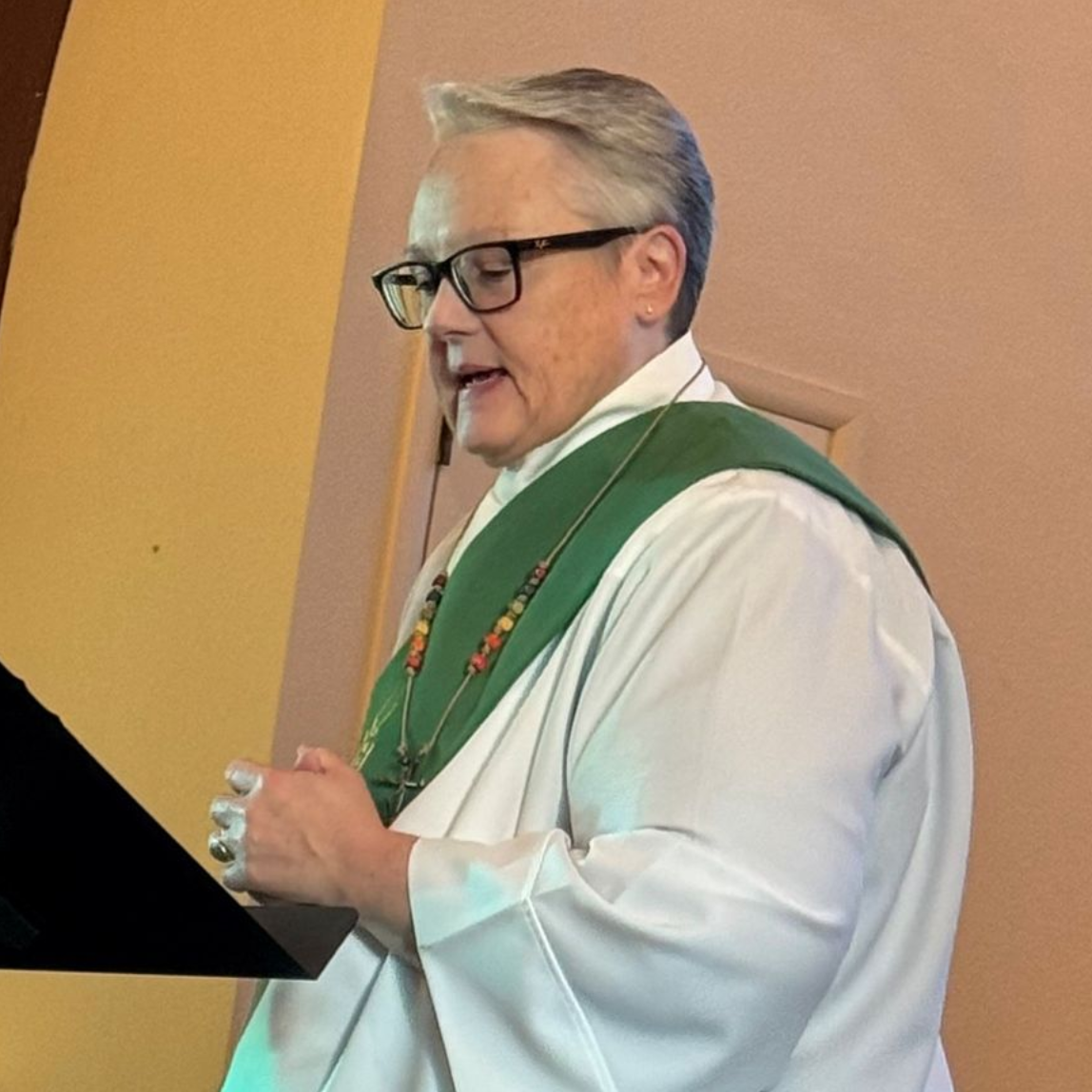
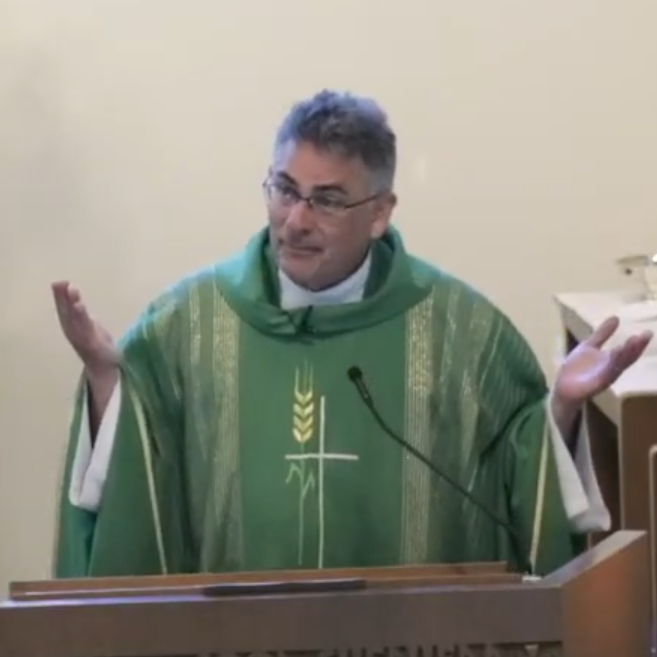
by the Rev. Josh Hosler, Rector
The Fourth Sunday of Easter, April 26, 2026
Acts 2:42-47; Psalm 23; 1 Peter 2:19-25; John 10:1-10
Well, Christy and I have planned a vacation to Namibia. Our child Sarah arrived there at the end of January to spend the entire spring semester of her junior year of college. So I will be away for the next three Sundays visiting Sarah.
Filling in for me will be the Rev. Joseph Peters-Mathews, a colleague who is between calls and has Sunday mornings free. It won’t be like when I was on sabbatical, though: he’ll only be here on Sundays, to preside at the Eucharist and to preach. The rest of the work of the church is yours to keep carrying on without me. Pastoral emergencies should be directed to Carole Loudenback, who chairs our Pastoral Care Team, or to the Rev. Anna Lynn, your Deacon.
I saw Joseph briefly during Holy Week, and he told me he’s excited to meet you all. He also told me that he plans during those weeks to preach primarily on our readings from the Acts of the Apostles. So I thought, hey, that’s a great idea—I think I’ll do the same. And so I have been. So while this is the day traditionally known as Good Shepherd Sunday, and that makes this our patronal feast, I’ll give it a miss and preach on the Good Shepherd again next year.
Today’s passage from Acts is very short, but there is so much packed into it! For two thousand years it has been a pivotal text for the Church’s understanding of itself. The first sentence is this: “Those who had been baptized devoted themselves to the apostles' teaching and fellowship, to the breaking of bread and the prayers.” What does this mean for us these days?
Yesterday at St. Mark’s Cathedral, alongside many others from all around Western Washington, our own Karen Dobbs was formally welcomed into the Episcopal Church. She was baptized at the age of two months at a Congregational church in West Seattle. But Karen has found a home at Good Shepherd, and after some time here, she decided she wanted to become an Episcopalian in a formal way. So I asked Maggie Monaghan to be Karen’s sponsor. Maggie was, herself, confirmed in the Episcopal Church just a year ago. Karen and Maggie have gotten to know each other over the past few months and went through a series of informative classes on Zoom that were offered by our diocese. Then, yesterday morning, as a group of us gathered around to lay hands on Karen, Bishop Melissa Skelton laid her hands on Karen’s head and prayed this:
Karen, we recognize you as a member of the one holy catholic and apostolic Church, and we receive you into the fellowship of this Communion. God, the Father, Son, and Holy Spirit, bless, preserve, and keep you. Amen.
And now Karen is an Episcopalian.
But before all that, the entire congregation renewed our baptismal vows. One of our vows looks back to this very passage from the Acts of the Apostles:
Will you continue in the apostles' teaching and fellowship, in the breaking of the bread, and in the prayers?
I will, with God’s help.
On the Day of Pentecost, after the Holy Spirit descended on the eleven apostles, and after Peter’s inspiring public speech led to 3000 more people being baptized, a little community was born that we now call the Church. At first, they were just called The Way. They were a group of Jews in and around Jerusalem who claimed boldly that the long-awaited Messiah had come … that he had, by all appearances, failed in his mission and been brutally executed … but that this had been God’s purpose all along. Instead of sending a flood to wipe everybody out, God had instead sent God’s own Son: a divine representative to take responsibility for everybody’s sins and to forgive them all. Now humanity could begin again.
Over the coming decades and centuries, Christians would begin to tell the story in a deeper way. They would claim that, in an eternal mystery, Jesus Christ is himself God, and so is the Holy Spirit, whom Jesus sent to give birth to the church and to guide it forever.
The first Christians, after being baptized into a new life, established new practices. They decided that if they were to love one another as Jesus had loved them, they must pool their resources so that nobody would be in need. They came to be known as fundamentally joyful and generous people, and more and more people decided they wanted to be a part of the Jesus movement.
This passage continues to hold out an ideal for us. Can you imagine, in present-day America, letting go of your right to own a house, understanding instead that your house and everything in it—shelter, food, a place to meet—belong to all Christians? Can you imagine the Church of the Good Shepherd never locking its doors, but always welcoming those in need to come in out of the rain and get warm, and to share a hot meal? Over the past 2000 years, some communities have tried to return to this ideal, but either it hasn’t lasted, or people have found a way to abuse it and ruin it.
And so we might feel nostalgic, like the early Christians “got it right” and we just don’t. But the earliest Christians were under the mistaken impression that since Jesus had died and risen, the end of the world was swiftly approaching, after which all the dead would be raised to life as Christ was, and heaven would come to earth, and the result would be God’s perfect paradise for all of us. This may be one reason that forgoing private ownership felt possible to them. Eventually, though, humans being humans, we continued to hoard and deprive one another. We see this change even within the Acts of the Apostles.
Yet at its best, the church still centers its identity on helping those in need, and not just those who are baptized. Ideally we give ourselves away to the surrounding community, steadfast in our belief that God will sustain congregations that do so. It’s never simple, but we know it’s right. And we still hang on to this persistent belief that somehow, in God’s good time, heaven will indeed come to earth, all the dead will be raised, and all shall be restored. We don’t have to know what this would look like to believe it. We simply trust that the Holy Spirit is guiding heaven and earth together into something perfect and permanent.
But being a Christian isn’t just about being a “good person.” The early Christians banded together to oppose the assumed norms of society. The way of empire is to exploit the many to benefit the few. Today we are residents of the United States of America, a republic that is also functionally an empire because our ideals have always far transcended our practices. More than ever before in our lifetimes, the many are being exploited to benefit the few. The church is to be the opposite of empire. Under the guidance of the Holy Spirit, in the words of Jesus’ mother Mary, we are to “knock down the mighty from their thrones and lift up the lowly.”
Christian ideals are a threat to those who hoard power, and the early Christians soon found themselves to be a persecuted people, no longer protected by the exceptions Rome had grudgingly carved out for Jews who toed the line. Before the Acts of the Apostles had even been written down, both Jews and Christians were without a temple, lying low, and in the case of Christians, meeting underground in catacombs so the authorities wouldn’t find them.
Theirs was a very different life from ours. Christians in America today are not persecuted. Instead, those in power lift up a false, disingenuous version of Christianity to be coddled by the empire, as long as it never embraces true Christian ideals. So the president can performatively read from the Bible, as long as nobody prosecutes him for his many crimes, and as long as nobody questions our nation’s right to stomp around the world exerting both military and economic dominance.
Ours is a different challenge, but the ways of empire remain the same. So … what might that mean for us?
Will you continue in the apostles' teaching and fellowship, in the breaking of the bread, and in the prayers?
I will, with God’s help.
To this day, those who are baptized commit to these three things. To continue in the apostles’ teaching and fellowship means to live our lives in community and keep learning, never growing stagnant in our understanding of God’s love. To break bread together is a sign of both ongoing fellowship and our understanding that Jesus is present among us every time we do. And we continue to pray together, and the way this is worded—“the prayers,” plural—suggests that already certain prayers were showing up as central, probably beginning with the prayer Jesus taught us, what we call the Lord’s Prayer.
When I’m preparing parents for the baptism of a child, I point to this vow and ask them what it means. Sometimes they think I’m looking for a theologically complicated answer, but I’m not. This vow literally means, “Come to church.” But even “come to church” makes it sound like “go to the gym,” like it’s an individual responsibility that you should do, for your own good. Think bigger: “Be the church.” Your baptism means that it’s time to reorient your entire life, not just your Sunday mornings. Be a part of what’s going on here, and then take it back out into the world wherever you go! With apologies to John F. Kennedy: “Ask not what your church can do for you. Ask what you, who are the church, are called to do to help the Holy Spirit heal the world.”
As I love to point out, Christianity is not an app on your phone. You can’t just close it and ignore it for a while. Baptism installs Christianity as the operating system on which all your other apps run. So planting yourself in a more or less healthy community of Christians is the duty of every baptized person. Otherwise it’s like thinking you can spend your life climbing mountains without ever returning to base camp!
That’s not meant as a guilt trip, but as an invitation. Don’t just have Christian identity; live as a Christian. Today we joyfully welcome Karen Dobbs into the Episcopal Church. And on my first Sunday back with you all—the Day of Pentecost itself—we will baptize Thomas Jowenson, age 2, welcoming him into the fold as the world’s newest Christian. I pray that all of you will let such occasions lead you to hearty, prayerful renewal of your own baptismal vows. You will … with God’s help. Amen.