
Good Shepherd Sermons & Blogs
The Bible is chock full of stories of God taking drastic measures. So why this ... baby?
2026-05
sermon preached at Church of the Good Shepherd, Federal Way, WA
www.goodshepherdfw.org
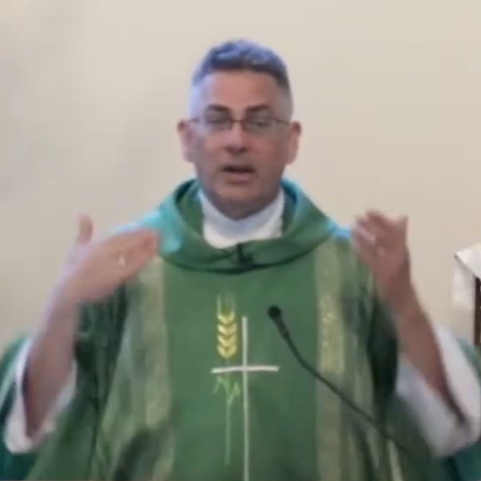
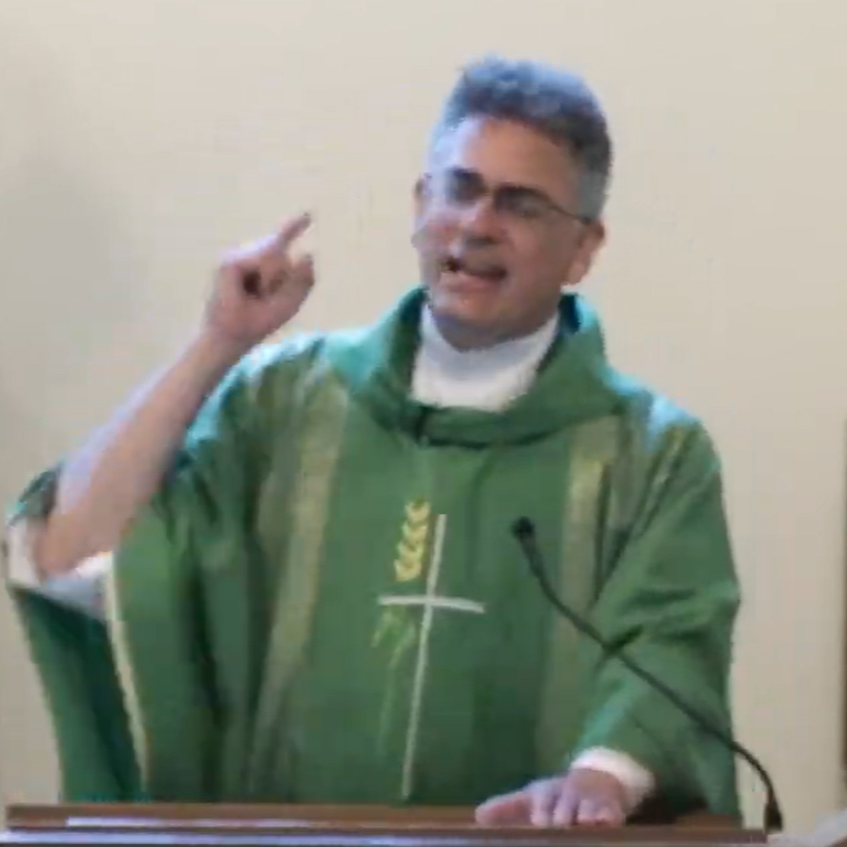
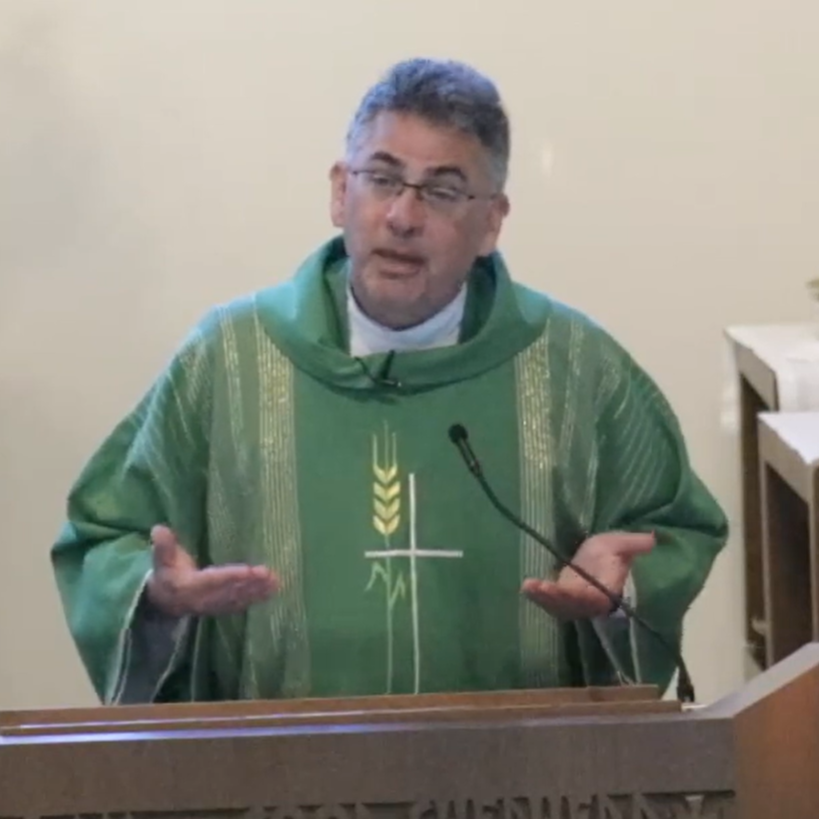
by the Rev. Josh Hosler, Rector
Christmas Eve, December 24, 2025
Isaiah 9:2-7 ; Psalm 96 ; Titus 2:11-14 ; Luke 2:1-14(15-20)
They say, “If it ain’t broke, don’t fix it.” But they don’t say what to do if it is broke. Maybe that’s because the answer is supposed to be obvious. If it is broke … just fix it, right?
I guess that’s fine if we’re talking about a broken door handle, or a broken zipper, or a broken vacuum cleaner, depending on your level of skill at fixing such things, or your available budget to have someone else fix it for you.
Now, if we’re talking about a broken arm, it gets a little more complicated. You have to get an expert involved for sure, and you have to take special measures to allow your arm to heal. Usually it will just fix itself, if you don’t get in its way. But it’ll take time, and painkillers—and prayers for healing sure can’t hurt.
All well and good. But what if we’re talking about a broken heart? A broken trust? A broken nation? A broken … humanity? We know we can’t “just fix” these things.
One morning many years ago, I came out of St. Mark’s Cathedral after the Sunday morning service and found that my car window had been smashed and my stereo stolen. My friend Amy burst out, “Ooooh, God’s going to get them!” I said I don’t think it works like that.
Nevertheless, our gut reaction is to want God to punish our enemies—and the sooner the better. “Can’t you just fix it? When will you give people what they deserve? Don’t you have that power? And if so, why don’t you use it?”
After all, the Bible is chock full of stories of God taking drastic measures to “just fix it.” When the whole world is evil, God drowns all but eight people and starts over. British comedian Eddie Izzard called that “the Etch-a-Sketch end of the world.”
When the people of Israel begin worshiping a golden calf, God threatens to destroy them all … until Moses appeals to God’s reputation and sense of honor. But later, when some of them rebel in the desert outside the Promised Land, we hear that God zaps fifteen thousand of them with a deadly plague … and this time Moses is good with it.
Then there’s the time when God allows the Assyrian armies to destroy the northern kingdom of Israel, but stops them just short of Jerusalem and zaps them with another plague. As the sun rises, eighty-five thousand soldiers lie dead!
It’s not an Old Testament/New Testament distinction, either. In the Christian scriptures, too, God occasionally zaps people dead, like the couple who lie to the apostles about how much of their wealth they’re sharing with the church. Zot!
Is that the kind of thing we want God to do? Smite our enemies with fire and disease? We may sometimes feel this way, but deep down we know it’s not actually going to make anything better. And if even we know that, then wouldn’t God know that?
Now, God isn’t always violent in the Bible. In other places, God is patient, generous, affectionate, and longsuffering. God aches for us to love one another instead of killing one another. God hangs in there with us and sends prophets to remind us that our violent actions also hurt ourselves.
So which of these stories more accurately reflects what God is like? Does God really fling down punishment like lightning bolts from above? Does God then apologize for flying off the handle and make like everything will be all right from now on? What kind of cycle of abuse is this?
Or could it be that we tell these stories simply because they reflect our worst fears about God? … And because they give us some explanation for the seemingly random events that do take human lives in great numbers?
You can feel free to disagree with me, but I don’t believe the stories of God’s violence. Not literally. I believe they are “what if?” stories that help us frame our questions about what God might really be like. Maybe for humans, the stories of God’s violence are like … watching horror movies. Or making up revenge fantasies. They help us process our feelings of fear, anger, and uncertainty.
Personally, I don’t find these stories helpful anymore. I want to know what God is really like—not like what God would be like in a worst-case scenario.
Now, to be clear, this isn’t about wishful thinking. I don’t want God to bug off and let us do whatever we want. But isn’t it evident that this is how God behaves in the world most of the time? Look around! If God is indeed good and loving and powerful, well, what is God actually doing? And how would we even know?
I don’t want a hands-off God. I’d much rather God to go about fixing everything that’s broken. Wouldn’t you? But what do Christians really believe about that?
If you harbor a strong need for certainty, the “just fix it” mentality feels great. But is it true?
No. In human relationships, there’s no such thing as “just fix it.” When we fight with friends or family, it’s not healthy to pretend like nothing’s wrong; we need to work through the pain and betrayal to arrive at forgiveness. When violent criminals go to prison, it doesn’t erase the harm they caused. When nations sign a peace treaty, it doesn’t magically solve the problems that led them into war.
And this is why I don’t believe the stories of God’s violence. To learn what God is really like, I need to look to all the other stories in the Bible—the ones that don’t promise any sort of quick fix, but instead, a slow, patient fix. A long-term rescue operation that happens in a very unexpected way.
When I shift my focus away from the stories of God’s violence, I choose to prioritize our many, sometimes contradictory, sacred stories differently. Just when I have come to the conclusion that there’s no possible solution to broken human nature, out of nowhere on a night in Judea, a baby is born, a baby just like any other. Eventually, this baby will be known by a term Isaiah used centuries before: the Prince of Peace. Not the King of Dominance. Not the Generalissimo of Terror. Not the President of Amoral Grift and Entitlement. No … the Prince of Peace.
The story of Christmas tells us, above all else, that God has not given up on us. God is actually setting about fixing our world. It turns out that the life of Jesus is a change no less drastic than the Great Flood! It just happens to be change of a fundamentally different quality. God sneaks in through the back door and leaves a gift for us under the tree—God’s very self.
Jesus has rebooted the world.
It just doesn’t fully look like it yet.
And this is where we find ourselves when we stop trying to “just fix it.” When we stop insisting on easy certainty, we are left only with the stark vulnerability of a newborn infant. What will become of this child? Somebody’s going to need to care for him—to feed this hope, to nurture this hope, to hold out a space for him to grow into.
God doesn’t come charging down to conquer us. God bubbles up from within Mary’s very body—on our own human terms, for one little human lifetime.
You know, I learned a valuable lesson by becoming a parent. I might feel frustrated, fed up, enraged … but in those cases, the worst thing I can do is fling down pronouncements from above, like divine fire, upon my own child. What could that possibly accomplish? It can only make her afraid of me. Is that an acceptable situation? No, the frustrated, angry parent needs to hear a different call and practice a different pattern. When God is fed up, what does God really do?
God gets down on one knee, looks us in the eyes, and reminds us, “I love you.”
It might not be what we want to hear right then. But it may well stop us in our tracks long enough to notice that God, at eye level with us, can actually see things from our perspective.
And then we are no longer mere victims of a cruel existence we didn’t ask to be born into. We discover that we are God’s beloved children, traveling together through the valley of the shadow of death, and beyond, into eternal joy.
“For the grace of God has appeared, bringing salvation to all.” Did you hear that? All! All humans, all creatures, all creation. Salvation is reconciliation. It is healing. It is growth. It is joy. If we ever felt distant from God, judged with angry disapproval, we need no longer fear that distance, because it was always an illusion. We need not fear God’s judgment, because God will help us heal, not harm us. God is among us, Emmanuel, God-with-us, right here and now.
The Christian message is nothing more and nothing less than this good news: By coming among us as Jesus of Nazareth, God has “just fixed it.” It’s done.
If that sounds too good to be true, I want you to notice something. You don’t need to have certainty about all this. It’s not about certainty; it’s about hope. Tonight, choose to receive hopeful reassurance.
If we’re going to tell stories to one another about what God might be like, will we choose to lean on the stories of God’s violence? Or the story of God being far more loving than any of us possibly could be? You always have that choice, you know. Because we can’t “just fix it”—and because none of us can—well, which sacred stories will you place at the center of your life? And what will you do about them?
May all the hope and joy of Christmas be yours—tonight, throughout the season, and throughout the coming year—with the gift of unrelenting hope—no matter how uncertain or fearful things may become. As long as we get to love one another as God loves us, this life is well worth living. Merry Christmas.