
Good Shepherd Sermons & Blogs
We meet God in the holy place where the stories are kept.
2026-07
sermon preached at Church of the Good Shepherd, Federal Way, WA
www.goodshepherdfw.org
by the Rev. Josh Hosler, Rector
The Second Sunday after Christmas Day, January 4, 2026
Jeremiah 31:7-14 ; Psalm 84 ; Ephesians 1:3-6,15-19a ; Luke 2:41-52
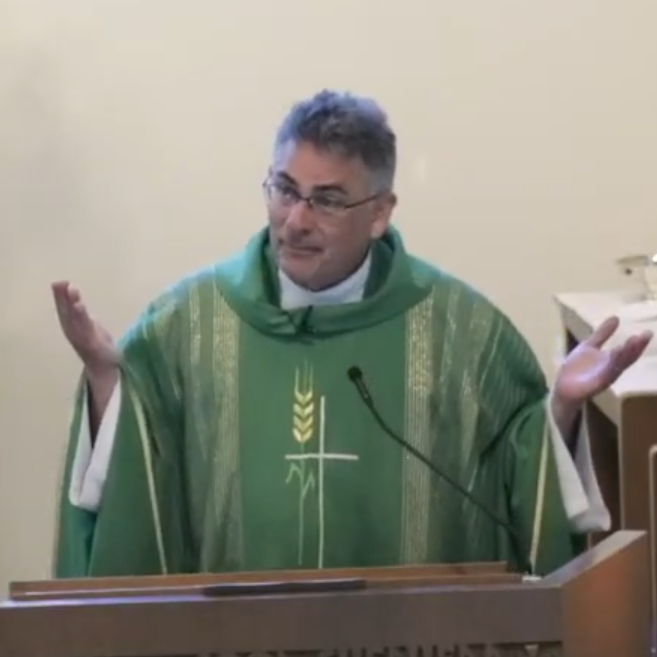
Do you know the expression “deep in my bag”? It means being singularly focused—working on something so intently and being so much in the flow that you don’t notice anything else going on around you. Today in the temple, Jesus is “deep in his bag.”
A couple years ago I heard a wonderful Black American extension of this expression: “I’m so deep in my bag, like a Grandma with a peppermint!” Well, when I write sermons, I usually get “deep in my bag, like a Grandma with a peppermint.” And having done so, I’m excited to share some thoughts with you this morning.
Now, today we are jumping around a bit. I hope to see as many of you here tomorrow night as possible for our Eve of the Epiphany celebration—the moment when the Magi finally come straggling into Bethlehem after their long journey. We’ll share some very old Epiphany traditions together, including the Chalking of the Door and the Proclamation of the Date of Easter.
Meanwhile, the story we heard just now is of Jesus at twelve years old. Why are we rushing ahead? Because next Sunday, Jesus will already be an adult coming to John for baptism.
See, the calendar of the church year is always moving on multiple timelines simultaneously. January 1 was the Feast of the Circumcision of Christ—the eighth day of Christmas, naturally—and February 2 will be the Feast of the Presentation of Jesus at the temple in Jerusalem when he is 40 days old. All of that makes sense on a daily timeline.
Our Sundays, though, will now move quickly into Jesus’ adult life and ministry, because we have a lot of stories to tell about that before Lent arrives. That means we can’t always tell the stories in the right order, or we might have to skip some important ones. So even before the Magi arrive, because we don’t want to miss it, today we hear of a twelve-year-old Jesus giving his parents quite a scare in Jerusalem.
One year when I was staffing at Camp Huston, a group of high schoolers created a skit based on this gospel reading. Upon losing Jesus for three days and then finding him in the temple, the girl playing Mary screeched, “How could you ditch us like this? We were worried sick!” The boy who played Joseph yelled and screamed and looked ready to give his son a good whoopin’.
But the boy playing Jesus shot back: “You can’t talk to me that way! You’re not my real dad!”
To which Joseph could only reply, “Oh yeah … I guess you’re right … but He won’t be paying your college tuition, young man!”
So Jesus, at age twelve, felt drawn to the temple. He couldn’t stay away. And he was so deep in his bag that he couldn’t even be bothered to tell his parents they could find him there. Anyway, in his mind, it should have been obvious to them. The temple was the place where Jesus could meet God … his real dad. And it was the place where all the stories are kept—like this worship space is for us.
Today, I find myself wondering at the realization that Jesus, like all the rest of us, went through stages not only of physical and emotional development, but of spiritual development. If he hadn’t, he would not have been human. But Jesus was also divine, so he must have felt close to God much of the time. The primary task of his growing-up years was to understand the nature of his relationship with God.
Whatever else that looked like, we have only this one canonical story of that development. On the brink of puberty, Jesus was too busy with his own priorities to be thoughtful to his parents. So really, how was Jesus different from any other 12-year-old?
The temple was the place Jesus most wanted to be. Jesus already knew the stories of his people. He knew that when the boy Samuel slept in the holy place, he heard God call to him. And Jesus knew the psalms of longing and the psalms of ascent, up the hill to Jerusalem for all the important festivals. “How dear to me is your dwelling, O Lord of hosts! … One day in your courts is better than a thousand in my own room!” If you want to hear God’s voice, then, it stands to reason that you would go to the temple. Jesus’ closeness to God the Father drove him to seek conversation with others who should know. He had questions—lots and lots of questions, as any 12-year-old should.
Jesus knew that Jeremiah had written so many centuries before, “Save, O Lord, your people, the remnant of Israel.” He knew the ancient promise that God would once again gather the people from the places to which they had been scattered. He knew that this would specifically include people who were the most disadvantaged—those with physical disabilities, those without wealth or resources, those who had been cast out. Jesus knew that everyone matters to God—that literally nobody is left out.
Jesus knew that Jeremiah had also written, “With weeping they shall come, and with consolations I will lead them back.” He knew that when the true shepherd of God’s people gathered the people, they would still have tears streaming down their faces—just as they were, in all their grief and despair. He knew that this shepherd would minister to them, refresh them, and give them hope. He also knew that God was called “father to Israel.” The notion of God as Father was not something Jesus made up. He had heard that title all his life. But he began using it in new and more personal ways.
So by the age of 12, Jesus didn’t only have questions; he had answers, and they were answers that impressed the rabbis. Eventually, Jesus would fully apprehend that he was God’s appointed shepherd—the Good Shepherd, not the hired hand—the shepherd who would lead God’s people to new hope. But Jesus would also realize that being the Good Shepherd meant restoring and upholding the dignity of every human being … and of human nature itself.
That point is really, really crucial for us in our times. Beyond any sense of theological correctness lies the far more important work of human dignity. You know, I looked back at my old sermons and found that another time I preached on this text—six years ago—our Jewish siblings had just experienced a frequency of violence that we had not seen in a long time. There were attacks on Jews in New York nearly every day of Chanukah.
I confess that I had totally forgotten about those events of 2019, because they were swallowed up quickly by the coming of COVID. But even then I was warning that anti-Semitic forces were on the rise, not only in America, but throughout the world.
It’s only gotten worse. Sometimes anti-Semitism looks like people blaming all Jews for the actions of the Israeli government. Sometimes anti-Semitism looks like fundamentalist Christians using Jews as a prop for their own terrible end-times theologies. And sometimes it looks like yet another shooting, like the one in Australia a few weeks ago. As Christians, it’s easy enough for us just to say, “Oh, that’s a shame,” and get back to the twelve days of Christmas. We can turn off the news anytime we like. But if we were Jewish, we would not have that luxury.
The historic relationship between Judaism and its offshoot, Christianity, is fraught with horror, and because of the way power dynamics have worked for two thousand years, all the horror comes from our side of the divide. Yes, all of it. We need to learn and understand and own that. We understand Jesus to be the Jewish Messiah, and we have every reason to believe in and follow him. But every time there is violence against somebody in the Jewish community, Jesus weeps. And the one who committed the violence becomes one of the wolves Jesus must bring to heel.
I’m focusing today on anti-Semitic violence as an example of the shape of our necessary work. But of course I’m also talking about Israeli violence against Palestinians, Russian violence against Ukrainians, and American violence against Venezuelans … and against those who have migrated to America. When we fail to respect the dignity of every human being, we make ourselves adversaries of Jesus.
See, the way we choose to live our lives teaches other people who we are. Are we trustworthy? Do we live what we purport to believe? Many people are leaving Christianity because of the church’s hypocrisy, and I can’t blame them. But we are those who choose to remain and work for change from the inside.
There is much work to do … so it’s a good thing that the Good Shepherd is at work in our community. The one who was once a boy asking questions and forming answers in the temple is teaching us every day, both inside and outside the church. As Richard Rohr writes, “God comes to us disguised as our life.” Figuring out what that means for us, as individuals and as a church community, takes focus, from week to week and year to year, all our lives.
I want to invite you to get deep in your bag at Good Shepherd, whether you’re a baby, a child, 12, 15, 30, 53, 65, or 97. This intergenerational community is where young people learn from the elders and elders learn from the young. But together, no matter our age, we are all on a reconciling journey with Jesus. Amen.