
Good Shepherd Sermons & Blogs
This newborn child threatens our security. What will we do?
2026-08
sermon preached at Church of the Good Shepherd, Federal Way, WA
www.goodshepherdfw.org
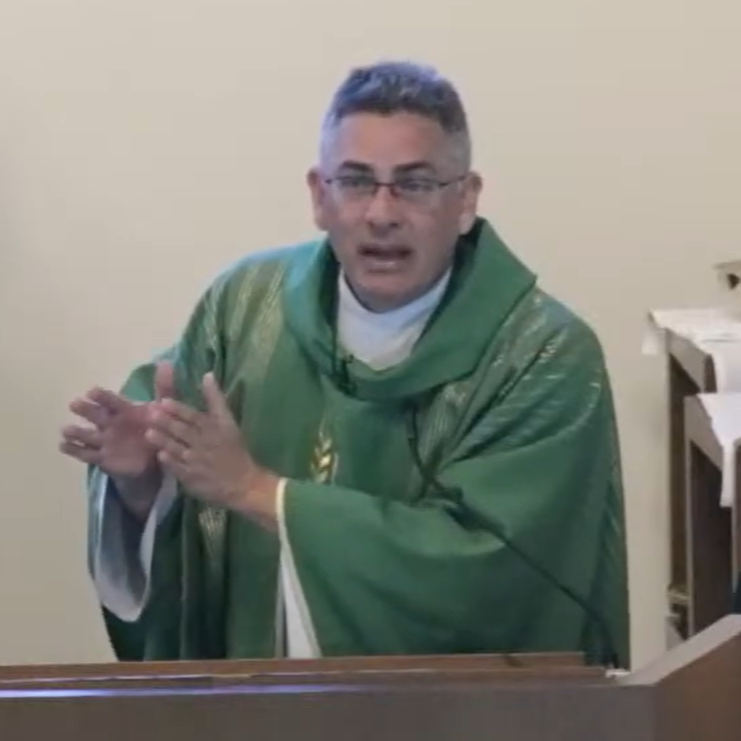
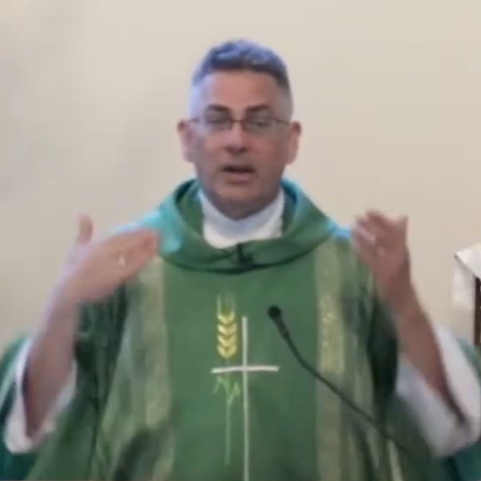
by the Rev. Josh Hosler, Rector
The Eve of the Epiphany (Twelfth Night), January 5, 2026
Isaiah 60:1-6 ; Psalm 72:1-7,10-14 ; Ephesians 3:1-12 ; Matthew 2:1-12
Tonight, Isaiah cries out, “arise and shine, for your light has come”! He is addressing the former Jewish exiles returning from Babylon to rebuild Jerusalem.
Isaiah does not deny that there is darkness all around, but he assures his hearers that the darkness never has the final word. The chosen people, scattered across the face of the earth, will now be gathered home, gently, lovingly, definitively. And all those who are not of the chosen people of God will be blessed, too, by this gathering in. They will express their joy and appreciation, bringing gifts to Jerusalem from the very ends of the earth—royal gifts like gold, and holy gifts like frankincense.
Paired with the Isaiah reading tonight is Psalm 72, which may date all the way back to King Solomon or may simply recall the glory days of Solomon, when the kingdom of Israel was as powerful and influential as it would ever become. The psalm imagines the kings of faraway lands coming to bring gifts.
Can you imagine a situation in which not only is your own nation truly the greatest on earth, but all the other nations also recognize its greatness and freely offer gifts to support it? It sounds like a fantasy, doesn’t it? How could this ever be?
Clearly this situation could not arise through the rule of some ordinary king. The monarch of such a nation would have to be a servant first—a shepherd who would provide and care for everyone, whether they’re citizens of that land or not, and wherever in the world they may live. Such a king would have to follow a different road from that of typical kings—a path marked by giving and generosity, not by fearful hoarding.
In short, if this were ever going to happen, it would have to be by God’s design and God’s action. And most of all, it couldn’t be forced. God is no dictator. The way of love must be freely chosen. How could even God begin a project so audacious, so ambitious, so seemingly impossible?
Well, we talked about this on Christmas Eve. God doesn’t fling down lightning bolts to straighten us out. God rises up to us from below, from inside, from the depths of our very humanity. God comes to us as a zygote, and then a fetus, and then a newborn child.
The story of the Bible is the story of God choosing people and giving them holy tasks to carry out—first one person, then a family, then a tribe and an ethnic group. But the choosing doesn’t stop there. God declares, “I choose this people … and this people, and this people, and this people!” Suddenly distinctions are erased, but uniqueness is not. There is no superior race; to claim so is hateful heresy. And there are none who are excluded, for God has made us all.
Imagine, then, a world in which the life of every human being is respected and honored. This is what Paul calls “the wisdom of God in its rich variety.” God obviously loves variety and diversity—just look around at God’s creation! And so God arrives among us to offer to be the unifying king in a world utterly lacking in uniformity. How will we greet this newborn king?
Matthew tells us how the wise would do so. They would come even from very far away and bring gifts, just like the kings in Psalm 72. The Wise Men Matthew describes aren’t kings … nor are there necessarily three of them. If you don’t believe me, look again at our gospel reading! We have Psalm 72 to thank for recasting the Magi as kings, over the course of centuries of services of Holy Eucharist pairing that psalm with this gospel. But “we unspecified number of Zoroastrian astrologers” doesn’t scan very well, so let’s just acknowledge the disconnect and let it be.
Anyway, these Magi—however many of them there are—come from faraway lands that have nothing to do with Judaism. They come to offer tribute to a new kind of king who is taking the world by quiet storm. They bring that royal gift of gold, and that holy gift of frankincense. They also bring a third gift: myrrh, a dark resin that is used in royal burials. Now there’s some foreshadowing!
But there’s yet another king we haven’t talked about, and that’s Herod, the illegitimate puppet king of the Jews, installed by the Romans specifically because he’ll eagerly collude with them. Herod’s legacy is to build up the tax-collecting apparatus for the Romans and to keep the peace by rebuilding the temple in Jerusalem. Now, if you’re a one-issue citizen and you’re glad for the temple, maybe you’ll happily pay exorbitant taxes and look the other way when Herod orders the execution of several of his own troublesome family members.
Oh yes, Herod is the worst kind of king: for him, it’s all about money, power, and fear. Keep the people in line, keep Rome at bay, and clear out a space to live in luxury. So visiting him first may not be the Wise Men’s wisest move. “Greetings, your majesty! Hey, can you tell us where we can find the newborn baby who is supposed to dethrone you?”
“Why, thank you for letting me know, gents! I have no idea where he is, but when you find him, could you please stop by here on your way home and let me know so I can also bring him … a gift?”
It takes a divine dream to warn the Magi that they must not tell Herod where the child is. They go home by another road, probably kicking themselves for not understanding the problem sooner.
And then Herod follows the usual road of kings like himself. When there’s a problem that threatens your precarious position … just fix it. By any means necessary. We didn’t read this part tonight, but next, Herod orders the killing of all the children under the age of two in the entire region of Bethlehem.
Biblical scholars agree that the Massacre of the Innocents is a fiction, a literary device created by Matthew to call to mind Pharaoh’s massacre of the baby boys of the Hebrews in Moses’ time, and also to set up the Holy Family to flee to Egypt, so that Jesus can then emerge from Egypt like Moses did. Matthew uses imaginative fiction to help us understand that Herod is indeed the worst kind of leader, while Jesus is the greatest. And historians like Josephus give us enough context to see that Herod really would have done something like this—it’s not just a political caricature!
You know, over the centuries, wise teachers have often described wisdom as a narrow path, so choosing it necessarily means rejecting the wide, well-traveled path. We read in the Book of Proverbs: “There is a way that seems right to a person, but its end is the way to death.”[1] Also, “The simple believe everything, but the clever consider their steps.”[2]
Tonight, I hear a call to us as Christians to spend our lives figuring out how to go by another road … how to follow this unusual king. We choose the path we walk, whether or not we realize the choice when we make it. We get to decide whether and how to expand our welcome, our honor, our respect for the dignity of other human beings. Will we bring gifts to the newborn child who threatens our security, or will we seek to eliminate him?
For indeed, this newborn child does threaten our security, even if we’re not kings in royal palaces. This child will force us to rethink everything about the way we live our lives. He comes to us in pure vulnerability, and he will need to be cared for and nurtured if he is to thrive and grow. That’s our job: honor the baby who invites us to walk the way of wisdom. And don’t get stuck merely fortifying our own little palaces—our financial security, our immediate families, our nations, or our churches. The baby Jesus insists that we leave the comfort and safety of that which we can control and get out there to serve the many who find their lives to be out of control.
Recently I saw a social media post from an organization called Liberated Together.[3] It was an analysis of how the Magi show up simply to worship without becoming a colonizing force.
First, though they come to Bethlehem, they don’t try to manage, oversee, or control the newborn King of the Jews. They don’t say, “We’re going to run this now.” They go home.
Second, they don’t take wealth away with them—no gold, no oil, no stock options. They bring wealth instead, and they leave it behind: gifts with no strings attached.
Third, they build no legacy from their encounter—no monuments, no buildings, no plaques. They accept the joy of seeing the baby Jesus, and that’s it.
Fourth, they go home by another road. They will not make a deal with King Herod or any other imperial force.
Finally, they lead with curiosity, not certainty. They come only to observe a holy mystery. The Magi are humble rather than entitled.
The post concludes: “To practice the spirituality of the Magi is to practice attention. It is learning how to stay awake in the dark—to notice where the Creator is shining light, disrupting certainty, and inviting refusal—to follow stars and dreams instead of tyrants.”
Friends, let’s be more like the Magi. In 2026, let’s walk this other road, not living in fear of what might be taken from us, but instead expressing joy in one another’s diverse gifts and hopeful anticipation of all the plot twists in our lives that we cannot predict. When we walk the road of wisdom together, along with the Magi, we’ll find that God is truly our leader, and even where there is pain and uncertainty, we will have everything we need. Amen.
[1] Proverbs 14:12
[2] Proverbs 14:15
[3] Instagram post https://www.instagram.com/p/DSVo5M7E_Ck/, retrieved 5 January 2026.