
Good Shepherd Sermons & Blogs
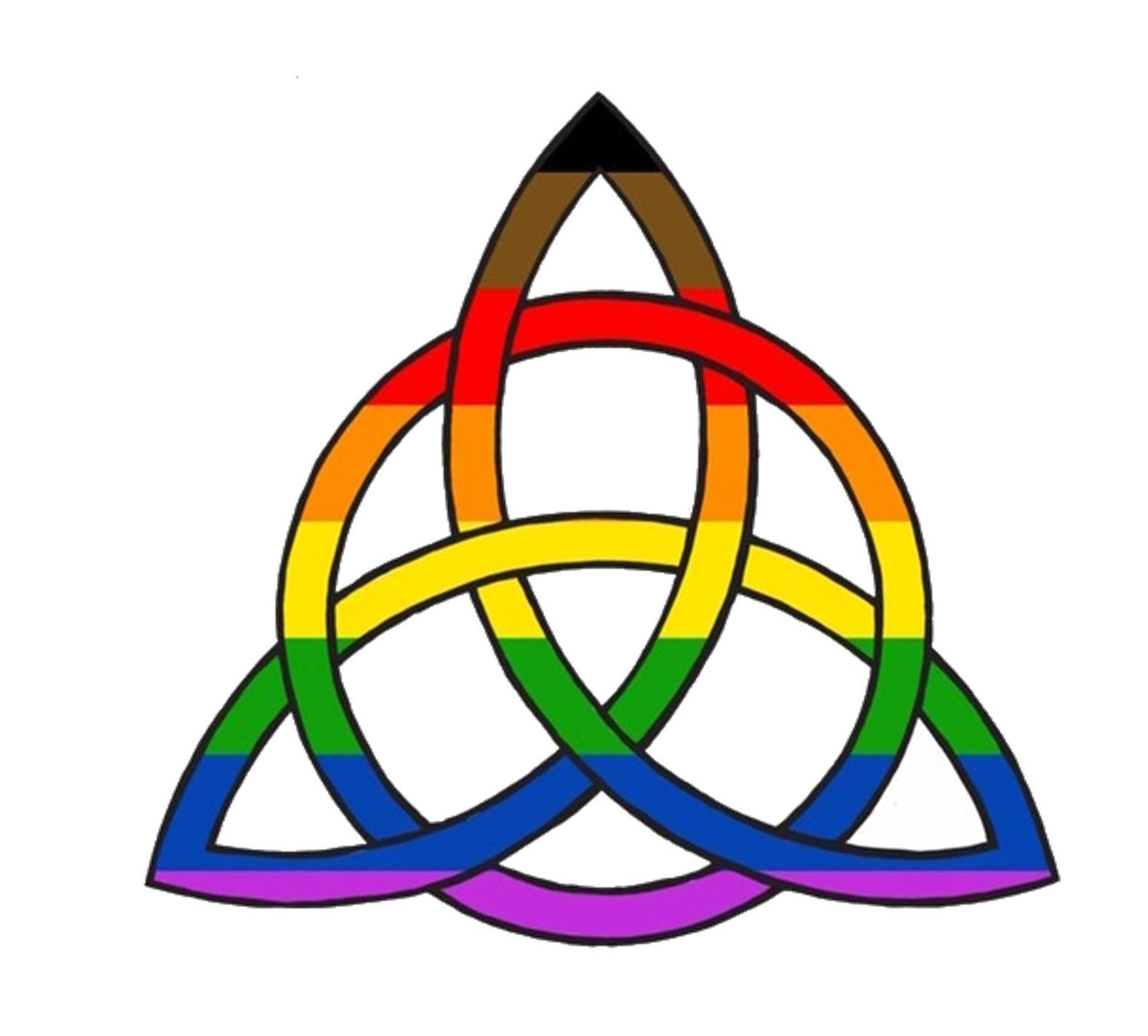
What's with this weird Christian three-ness?
2026-34
sermon preached at Church of the Good Shepherd, Federal Way, WA
www.goodshepherdfw.org
by the Rev. Josh Hosler, Rector
The First Sunday after Pentecost: Trinity Sunday, May 31, 2026
Genesis 1:1-2:4a; Psalm 8; 2 Corinthians 13:11-13; Matthew 28:16-20
Well, the Holy Spirit sure was present last Sunday! Nearly two thousand years after that first Pentecost, 109 of us gathered here for the baptism of Thomas Jowenson. Now, you all know I wear my heart on my sleeve. Various people told me afterward that they were not only enjoying the energy in the room … they were enjoying my personal energy in the room! But that’s because I was enjoying the personal energy of Thomas in the room as he became the world’s newest Christian. The Holy Spirit is like that, though … spreading like enthusiasm.
But that was last week. One week after we mark the arrival of the Holy Spirit, we come to another of the seven principal feasts of the Church: Trinity Sunday. So this week isn’t just about the Holy Spirit, or about Jesus, or about the God the Father … it’s about all three.
But why three? Does that even make any sense?
When Sarah was little, we spent a lot of time listening to a children’s album by the band They Might Be Giants called Here Comes the 123s. There’s a song on that album with these lyrics:
There's only one everything
The last time I checked, there's only one everything
It kinda makes sense that there would only be
Just one, not ten, not three
What if you drew a giant circle?
What if it went around all there is?
Then would there still be such a thing as an outside?
And does that question even make any sense?
This song is supposed to teach kids about math. But it’s also about philosophy … and, by extension, it’s about theology. It kind of makes sense that there would be only one God. Ask any Jew or Muslim, and even many Hindus, and they’ll say the same. So what’s with this weird Christian three-ness?
After all, the Trinity is not in the Bible. Well … not as such. The doctrine and theology of the Trinity—that is, God being conceived of as both one person and three persons simultaneously—was developed over the course of several centuries after the works of the Bible were all completed. Some texts in the Bible serve as pointers toward Trinitarian theology, to greater or lesser degrees of helpfulness.
Here’s a case in point: In the Creation story in the very first chapter of Genesis, we hear God say, “Let us make humankind in our image.” We may be tempted to imagine that God has coded the Trinity right into the Bible from the very beginning. But this is not the case … the first-person plural there refers to God and all the other heavenly beings in God’s court.
Alongside this red herring, though, today we do hear the two most explicit pointers to the Trinity in the Bible: one in Matthew’s gospel, and the other in Paul’s Second Letter to the Corinthians. Paul signs off by blessing the church in Corinth: “The grace of the Lord Jesus Christ, the love of God, and the communion of the Holy Spirit be with all of you.” And at the conclusion of Matthew’s gospel, Jesus sends his apostles out into the world to baptize people “in the name of the Father and of the Son and of the Holy Spirit.” We find no accompanying theological proclamations—just the reference to these three … persons.
Some years when I preach on the Trinity, I try to help people really understand the theology that developed. But there are two dangers here for the preacher. Alan Jones, the former dean of Grace Cathedral in San Francisco, once said, “It is impossible to preach on the Trinity for more than sixty seconds without lapsing into heresy.” He was probably right. The other danger is that the seminary-educated priest can delve deep into the notes from his systematic theology class and assault people with terms like perichoresis and Sabellianism and hypostasis and mutual indwelling. And the danger of doing both at once is probably far greater than I’d like to admit.
So this year I’m not going to try to explain to you how the Trinity works, or how the Trinity is possible. Instead, I’d like to suggest a couple reasons that the Trinity is necessary. Indeed, I think it’s the only way Christianity makes any sense at all.
In preparing for this sermon, I was thumbing through a book of writings by theologians of centuries past, and I came across a theologian I’d never heard of before called Richard of St. Victor. He lived in Scotland 900 years ago, and I’ll paraphrase his argument. After agonizing a bit himself over the apparent futility of understanding the Trinity, he says that if we take as our starting point that God is love, then God cannot be solitary. There’s no such thing as love without someone else to love. And God could not even conceive of creating beings to love unless God knew in the first place what reciprocal love is like. Therefore, God must always have had someone to love—at least one separate but united person within God’s very being.
Richard of St. Victor reasons this out in very 900-year-old ways, but honestly, his argument isn’t all that different from that of modern-day theologians like Jürgen Moltmann. I referenced Moltmann on Good Friday, and he gives yet another reason why we must understand God to be a Trinity. This is the way I paraphrased Moltmann that day:
“If Jesus is not himself God in the flesh, and God sends Jesus to be brutally murdered, then God is merely cruel and abusive … But if Jesus is God, then we see God stepping right into our suffering alongside us.”
And that, my friends, is what love looks like: being willing to jump right into the heart of another person’s pain to help them bear it. If this is fundamentally what God does, then God must also be in loving relationship not only with us, but with Godself. With all due respect to Whitney Houston—and acknowledging that “learning to love yourself” is not only important, but crucial, especially for overcoming past trauma and shame—love of self is not “the greatest love of all.” Jesus taught that the greatest love of all is “to lay down one’s life for one’s friends.” Love cannot exist without someone to love.
OK, this may help us understand the necessity there being two persons within Godself who love one another. But why three? Simply this: Two’s company, but three’s a crowd. I mean that in a positive way—not with the negative connotation of the cliché. Three is a magic number—it moves us beyond mere binaries into true diversity.
For indeed, God loves diversity over uniformity. We see this everywhere in creation—in the vast panoply of different species and climates and personalities. If we were all exactly alike, it would be impossible for us to love one another—we’d only be loving ourselves in another form. We wouldn’t really have any choice, would we? And we wouldn’t have anything to share with one another.
Furthermore, if we only ever loved one other person, we would only know one way to love. So add the Holy Spirit into the mix. Three is the number that opens us up toward God’s infinity.
Well, all this is well and good. But what if we still feel like this is all a little too heady and fiddly? What if you’re hearing all this about the Trinity and you’re still not convinced? That’s totally fair … and you’re in good company. I want to point you to a small but crucial detail in our passage from Matthew’s gospel: “The eleven disciples went to Galilee, to the mountain to which Jesus had directed them. When they saw him, they worshiped him; but some doubted.”
Hmmm. After several occasions of the Risen Christ coming back from the dead to be with his friends, to reassure them, to open them up to an exciting if hard-to-understand future … and while Christ is standing right in front of them … some doubted. The presence of a man risen from the dead is not enough to fully convince those who knew and loved him best.
What does it say next? Does Jesus tell the doubters to knock it off? Does he scold them for not having enough faith—for not manufacturing for themselves some form of certainty? No. What does Jesus do? He doesn’t tell them to understand in their heads. He gives them something specific to do:
“Go therefore and make disciples of all nations, baptizing them in the name of the Father and of the Son and of the Holy Spirit, and teaching them to obey everything that I have commanded you.”
OK, so … baptize people. Not forcibly. Not coercively. Share the Good News of the Way of Love that Jesus taught his friends to walk—a way that even nullifies the effects of death! Then expand the circle. Baptize people who want to follow in his steps as well. This means doing all the things Jesus commanded us. And what are those commands? Simply these: “Love God. Love one another as you love yourself.”
In other words, doubt is only a problem when it sits in a room by itself. The path through doubt is forward in honesty, and with a specific mission to accomplish. Never live merely for yourself, but give yourself to others in love. Journey with Christ in love and all your doubts will have a healthy place to sprout into something healthy and growing.
Anyway, none of us does this alone. Jesus reassures us even now: “Remember, I am with you always, to the end of the age.” Amen.