
Good Shepherd Sermons & Blogs
To show mercy inherently involves risk.
2026-35
sermon preached at Church of the Good Shepherd, Federal Way, WA
www.goodshepherdfw.org
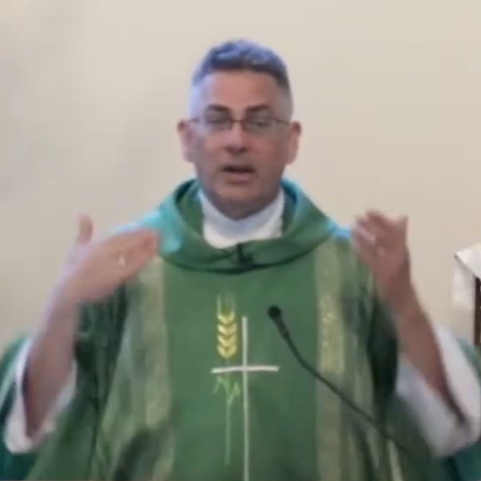
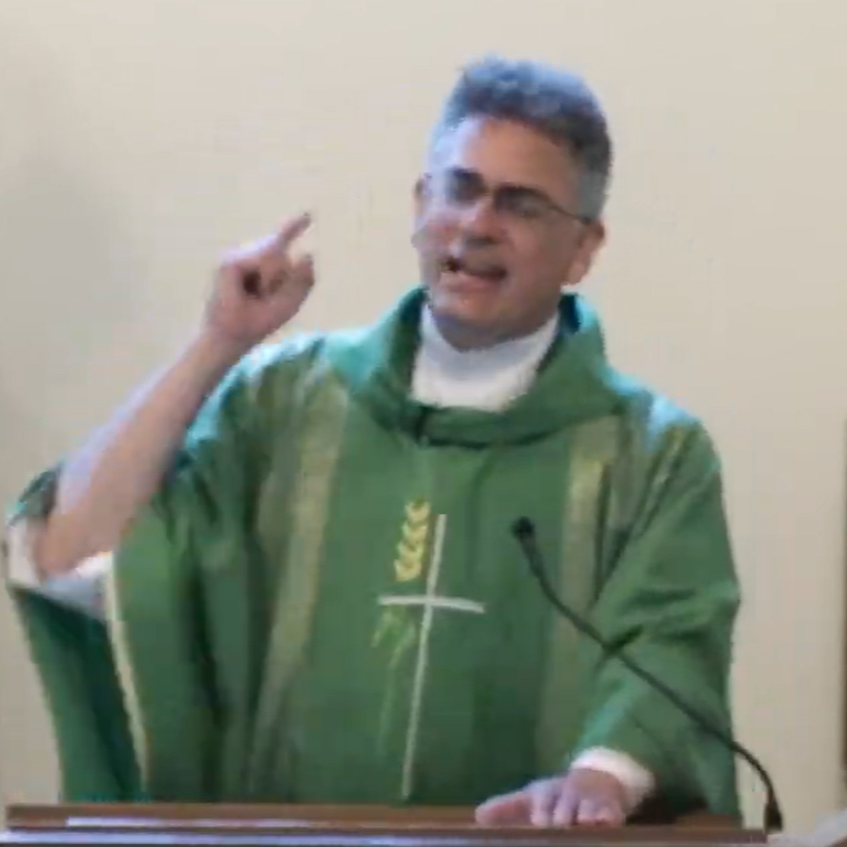
by the Rev. Josh Hosler, Rector
The Second Sunday after Pentecost (Proper 5A-tr 2), June 7, 2026
Hosea 5:15-6:6; Psalm 50:7-15; Romans 4:13-25; Matthew 9:9-13, 18-26
Every now and then I get a fortune cookie fortune that’s not banal or silly, but actually profound and helpful! There’s one in particular that I came across pre-COVID. I taped it to the bookshelf in my office, and it’s still there. It says: “Courage is not simply one of the virtues, but the form of every virtue at the testing point.”
As I looked over today’s readings, this fortune cookie fortune kept coming back to me, because I do believe that courage is the “x factor”: the virtue necessary for doing the right thing in the most crucial situations in our lives.
Today the Prophet Hosea portrays God as a fed-up parent. The children rightly understand that God loves them and doesn’t want to harm them. Unfortunately, they decide that God must be a pushover. So they do the bare minimum, believing they are technically following the rules. Yet they themselves aren’t willing to lift a finger to show mercy to others.
They don’t realize that until they love one another, they cannot truly be said to be loving God. And loving one another will take courage.
God is always trying to nurture courage in us. The sweep of the narrative in the Hebrew Scriptures points in this direction. Over time, as the biblical authors tell it, God relies less on punishment and more on patience—which may well take courage on God’s part! Punishment is quicker and easier, but will it actually bring about change and healing? Or will it just make us afraid to break rules?
So God chooses instead to teach by example. The Christian claim is that this culminated in Jesus, the ultimate example of what God is really like. Jesus didn’t go in for merely keeping the letter of the law. Instead he insisted on healing people in times and places that were inconvenient for the powers-that-be. He got angry at injustice. He flipped tables. He went on long rants against the hypocrisy of people in safe positions of power. Jesus’ zeal and passion was for the higher law of love, rather than the lower law of rule-keeping. So he taught by example—using parables to upset people’s conventional understandings. Then, as it’s phrased in our children’s curriculum, Godly Play—finally, one day, Jesus became a parable himself.
“After two days he will revive us,” Hosea’s listeners insist. “On the third day he will raise us up, that we may live before him.” Christians have long relied on this passage as a prophecy of Christ’s death and resurrection, though that does require taking it totally out of context. In reality these words are a poetic way of saying, “God will get over being mad at us and just forgive us eventually—we know we can count on that, so why worry?”
However … this is not how God responds. God finds that their repentance is insincere and will not forgive or restore them. God refuses to raise them up on the third day. Why? Because the people are merely checking off boxes, all the while failing to love.
It doesn’t take any courage to say, “I love the Lord.” How are you allowing love to change your life today—your habits, your assumptions, your blind spots—so that you can be truly present to those who need your love the most? That takes courage. Are there any more courageous words than “I was wrong; I’m sorry”? Or, “Oh, gosh, I never knew that I was having that effect on you”? Or, “Here is my demonstrated commitment to do things differently from now on”?
A word of caution about this passage, though. Hosea’s writing is not a literal description of how God acts all the time, but a metaphor proceeding from the author’s personal understanding and immediate experience. His metaphor does not need to work for you just as it is.
For example, I urge you not to focus on the apparent description of God first wounding us, and then binding us up. I don’t believe God is actually like this. I think that piece of the metaphor is dated, steeped in a culture in which parents were expected to beat their children as punishment. There are still many cultures in the world today where this is the norm, though we know perfectly well from decades of research that there is no upside to physically harming your children. That’s just abuse. So if you can’t hear this passage and get beyond that, it’s OK. There are plenty of other metaphors.
The main issue here, I think, is this question: What’s the difference between being punished and being held accountable? And how often do we find ourselves being held accountable for our misdeeds, simply through the natual consequences that follow from them? Usually the consequences are punishment enough: we don’t need to believe that God is inflicting consequences independently.
I do believe, though, that sometimes God is involved in turning those difficult consequences toward new possibilities.
So let’s turn to today’s gospel and check out Matthew the tax collector. You know, we may not be able to relate to Matthew’s profession of tax collector in our own context. We can try to identify a parallel, but that will mean looking not at the duties of his job, but at the reasons his own people hated him so much.
A 2024 poll[1] reveals that the most hated profession in America is … politicians. No surprise there. The second most hated is insurance brokers. Then there’s a three-way tie: social media influencers, gun sellers, and … erm, priests! OK, I’m not sure this poll is going to help us find a parallel, at least I hope not in this gathering. So instead, let’s imagine Matthew as … an ICE agent. Better yet, a Latino ICE agent.
Do you see where I’m going here? Matthew is a betrayer of his own people. He is helping prop up the unjust structures that keep the poor in their place and keep everybody afraid, all the time. Then Jesus says, “Follow me.” And Matthew immediately drops everything and follows.
I wonder how much courage this took? Maybe Matthew was already primed to make a change. But those who are firmly ensconced in their careers and living comfortably don’t usually just drop it all, even if they know their career is problematic. Well, whatever was going on, Jesus knew that the time was right to call Matthew into a new way of life. Jesus showed the courage to be merciful, and that gave Matthew the courage to break away from the trap that economic security held him in and embrace instead the risky way of love.
How do those around Matthew react? With scorn, of course. Matthew has a history that makes him untrustworthy. When a famous TV preacher is forced to admit to years of sexual impropriety—or sexual crimes!—how likely are you to believe he will actually change? When a politician has to apologize for past public statements or gross misjudgment, how can you be sure their motives are pure?
If you don’t know them personally, I don’t imagine there’s any way you can be sure of the sincerity of their repentance. But Jesus has the courage to take a chance on Matthew, and he asks that all his followers do the same. We’ll see this again in the Acts of the Apostles with Paul’s repentance, as he goes overnight from notorious persecutor of Jesus-followers to their most ardent advocate.
To show mercy inherently involves risk. You could be taken advantage of. You could lose face, or money, or societal standing. You could incur the wrath of those who don’t want mercy shown. Mercy must always be a deliberate choice. The usual systems of society will typically work against mercy. You have to actively oppose them to take part in it.
As Christians, we don’t just get to decide we’re not merciful people—that we’re not the kind to give second and third and seventy-seventh chances. Neither are we asked to be doormats, letting people walk all over us. Or to be foolish in our leadership: the reason people don’t trust priests is that so many dishonest, predatory priests have been moved around by their bishops strategically to avoid accountability. That’s not mercy!
And I think that’s the key here: the courage to show mercy to someone depends on their willingness to accept accountability. Change begins with honesty. It begins with us being courageous enough to say, “I was wrong, and I want to make amends.” This is precisely what Hosea does not hear. But it’s precisely what Matthew demonstrates by simply walking way from his only source of income.
“Courage is not simply one of the virtues, but the form of every virtue at the testing point.” Only courage will help us become more principled … and more loving. Without it, mercy becomes impossible.
So I have an ask for you this week. I want to invite you to look back on your life and identify a time when you made a courageous decision. It might be as big as getting married, or walking away from a career. It might be as small as making a heartfelt apology to someone who had power over you, or giving someone another chance when there were no guarantees. If that decision yielded obviously good fruit, wonderful. If it led to you being hurt, that doesn’t mean it wasn’t courageous. What matters is that it’s a decision you would not go back and change. Courage doesn’t mean foolishness. It means seeing the opportunity to help make something better and going for it, even when the attempt fails.
Next, I want to invite you to share the story of that decision. Put it in an email and send it to me; my email address is in your service leaflet. I’d like to remove your name from it (or keep it in, if you prefer) and share it with the congregation. Will you allow me to do this—to share stories of courage from within our community? For indeed, courage is how we grow. Not by playing it safe all the time. Not by checking off a list of rules. Not by trying to pacify an angry god. Not by hedging ourselves in with safety.
“I desire mercy,” Hosea hears God saying, “not sacrifice.” Jesus quotes him, and then he sets about healing: healing a tax collector, and then healing a bleeding woman, and then raising a little girl from the dead. When Jesus calls us to live a life of faith, that means determining that we will do the courageous thing at the moment when it matters most. Amen.
[1]
https://www.resumehelp.com/career-blog/most-hated-and-loved-jobs